


What Is a Diamond Grading Report?
What Is a Diamond Grading Report?
A diamond grading report records the findings of a gemological laboratory after it examines a diamond. Depending on the service, the report may identify whether the stone is natural, document the 4Cs—cut, color, clarity and carat weight—and list its measurements, proportions, polish, symmetry, fluorescence and identifying characteristics.
Although shoppers often say “diamond certificate,” grading report is the more precise term. GIA specifically states that it does not certify or appraise diamonds. IGI also explains that its reports are opinions based on the examination performed and are not appraisals, warranties or guarantees of value. The report gives you standardized quality information; it does not set the retail price or promise future resale value.
For a broader introduction to the information these documents contain, see What Does a Diamond Certificate Actually Mean?.
What Does a GIA Natural Diamond Report Include?
GIA offers several natural-diamond report formats for loose D-to-Z diamonds. Its full Diamond Grading Report includes a 4Cs assessment, measurements, a proportions graphic and a plotted diagram of clarity characteristics. Other formats serve different sizes or use cases. For example, the Diamond Dossier includes the major grading results but does not include the plotted clarity diagram.
For eligible standard round brilliant diamonds, GIA reports can include an overall cut grade. Fancy shapes still receive information such as polish, symmetry and proportions, but buyers should not expect the same overall GIA cut grade used for a standard round brilliant. This is one reason the exact report type and the stone’s shape matter when comparing documents.
What Does an IGI Natural Diamond Report Include?
IGI issues reports for natural diamonds that document quality characteristics including the 4Cs and identifying details. IGI also provides separate report services for finished jewelry, which can be useful in parts of the market where the stone has already been mounted.
An IGI report should clearly identify the item examined and provide a report number that can be checked through IGI’s official verification service. As with GIA, do not assume that every IGI document has the same fields. A loose-diamond report, a jewelry report and another specialized service can present different information.
Is GIA Better Than IGI for Natural Diamonds?
There is no responsible one-word answer. GIA has long-standing recognition in natural-diamond education and grading, while IGI grades both natural diamonds and finished jewelry across international markets. The more useful question is whether the report is appropriate for the item, authentic and detailed enough for the decision you are making.
Laboratory grades are expert opinions, and reports issued by different organizations should not be treated as mechanically interchangeable. If you are comparing two diamonds closely on price and quality, using reports from the same laboratory and the same report category can make the comparison easier. If the laboratories differ, examine the full documents and the diamonds themselves instead of comparing only a single color or clarity grade.
How to Compare GIA and IGI Reports Before Buying
Confirm natural origin. The report should clearly identify the stone as a natural diamond. Do not infer origin from a color, clarity or carat grade.
Verify the report number. Enter the number through GIA Report Check or IGI Verify Your Report, then confirm that the archived details match the document you received.
Match the report to the diamond. Compare carat weight, shape and millimeter measurements. When a report-number inscription is present, ask a jeweler to view it under magnification and match it to the document.
Read beyond the headline grades. Review polish, symmetry, fluorescence, proportions and comments. A diamond is more than four letters and numbers.
Compare the correct report formats. A full grading report and a compact dossier may not contain identical fields. Check what is omitted before interpreting the difference.
Evaluate the diamond visually. A report describes quality characteristics, but it cannot tell you which diamond you will find most beautiful. Compare brightness, pattern, outline and overall appearance in more than one lighting environment.
Separate grading from appraisal. Use the grading report to understand quality. If you need a monetary value for insurance, obtain an appropriate appraisal rather than treating the grading report as a valuation.
Why the Diamond Still Matters More Than the Logo
A grading report is decision support, not a substitute for examining the stone. Two natural diamonds with similar grades may show different proportions, facet patterns or face-up appearances. A report can help you understand those differences, but your final comparison should also consider the setting, budget and visual priorities that matter to you.
Cut deserves particular attention because it influences how a diamond interacts with light. If you are comparing shapes or trying to understand why similarly graded stones look different, continue with Diamond Cuts Explained: Which Shape Is Best?.
Zen Diamond’s Natural-Diamond Position
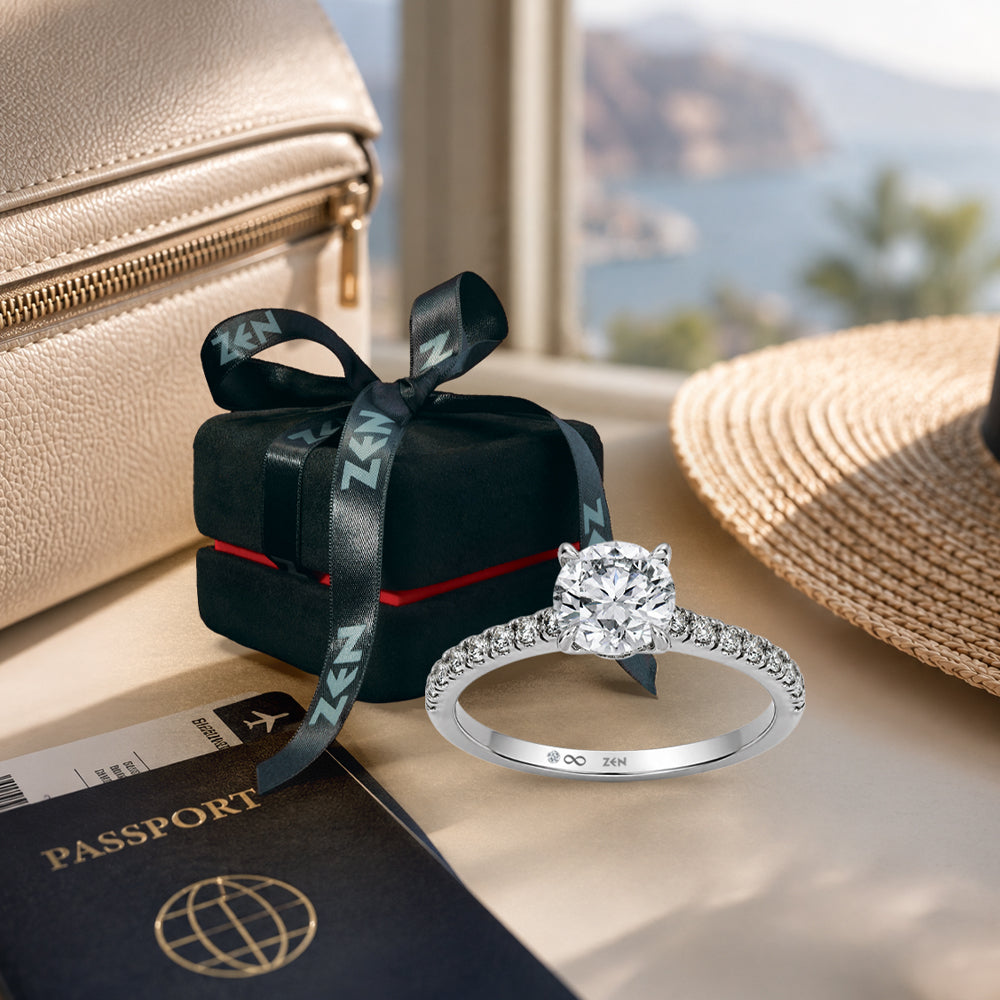
Zen Diamond exclusively offers natural diamonds. That position should be separate from the question of whether a report comes from GIA or IGI: both laboratories provide services for natural diamonds, and the accompanying documentation can vary by stone and product.
A Zen Diamond Certificate of Authenticity and an independent laboratory report do not necessarily serve the same purpose. Before purchasing, check the specific product information and ask which documents accompany the piece. This gives you a clear record of what you are buying without assuming that every diamond or jewelry item uses the same report format.
Frequently Asked Questions
Does IGI grade natural diamonds?
Yes. IGI issues natural diamond reports as well as reports for laboratory-grown diamonds, gemstones and finished jewelry. The report should state the origin and type of item examined.
Does GIA certify diamonds?
GIA uses the term grading report rather than certificate. Its reports document the dimensions, quality and identifying characteristics of the examined diamond; they are not appraisals or guarantees.
Can a GIA and an IGI report give different grades?
Differences of opinion are possible because grading involves expert assessment and laboratories may use different methods, report formats and procedures. Compare the entire report and, when possible, compare diamonds graded by the same laboratory.
Is a grading report the same as an appraisal?
No. A grading report describes quality characteristics. An appraisal estimates monetary value, often for insurance or other financial purposes.
Should every diamond have an individual laboratory report?
Not necessarily. Independent reports are more common for significant loose or center diamonds, while small accent stones are often sold without individual reports. Check exactly what documentation accompanies the jewelry you are considering.
Does Zen Diamond sell lab-grown diamonds?
No. Zen Diamond exclusively offers natural diamonds.
Explore Natural Diamond Engagement Rings
Use the grading report to understand the diamond, then compare the design, proportions and setting that bring it to life. Explore Zen Diamond engagement rings and wedding bands crafted exclusively with natural diamonds